
Keeping Learning Alive Through the Summer (Without Making It Feel Like School)
The summer holidays are a time for slowing down.
For muddy feet, lazy breakfasts, ice creams that melt too quickly and evenings that seem to last forever.
They’re a chance for children to rest after a busy school year, to follow their curiosity and simply enjoy being children.
But while I don’t believe the holidays should feel like school at home, I do think they’re the perfect opportunity to keep learning alive in gentle, joyful ways.
A little reading here, a maths game there, a trip to the library or a conversation sparked by a nature walk can make a huge difference, all without worksheets or pressure.
The best learning often happens when children don’t even realise it’s happening.
Why Reading Matters So Much
Reading is one of the greatest gifts we can give our children.
It builds vocabulary, confidence, imagination and empathy. It strengthens concentration, sparks curiosity and opens doors to places they may never otherwise visit.
Most importantly, reading should be a pleasure.
The holidays are the perfect time to rediscover that.
Rather than insisting on a set number of pages, create opportunities to fall in love with stories.
Read together in a hammock.
Take books on a picnic.
Visit the library every week and let your children choose anything that catches their eye.
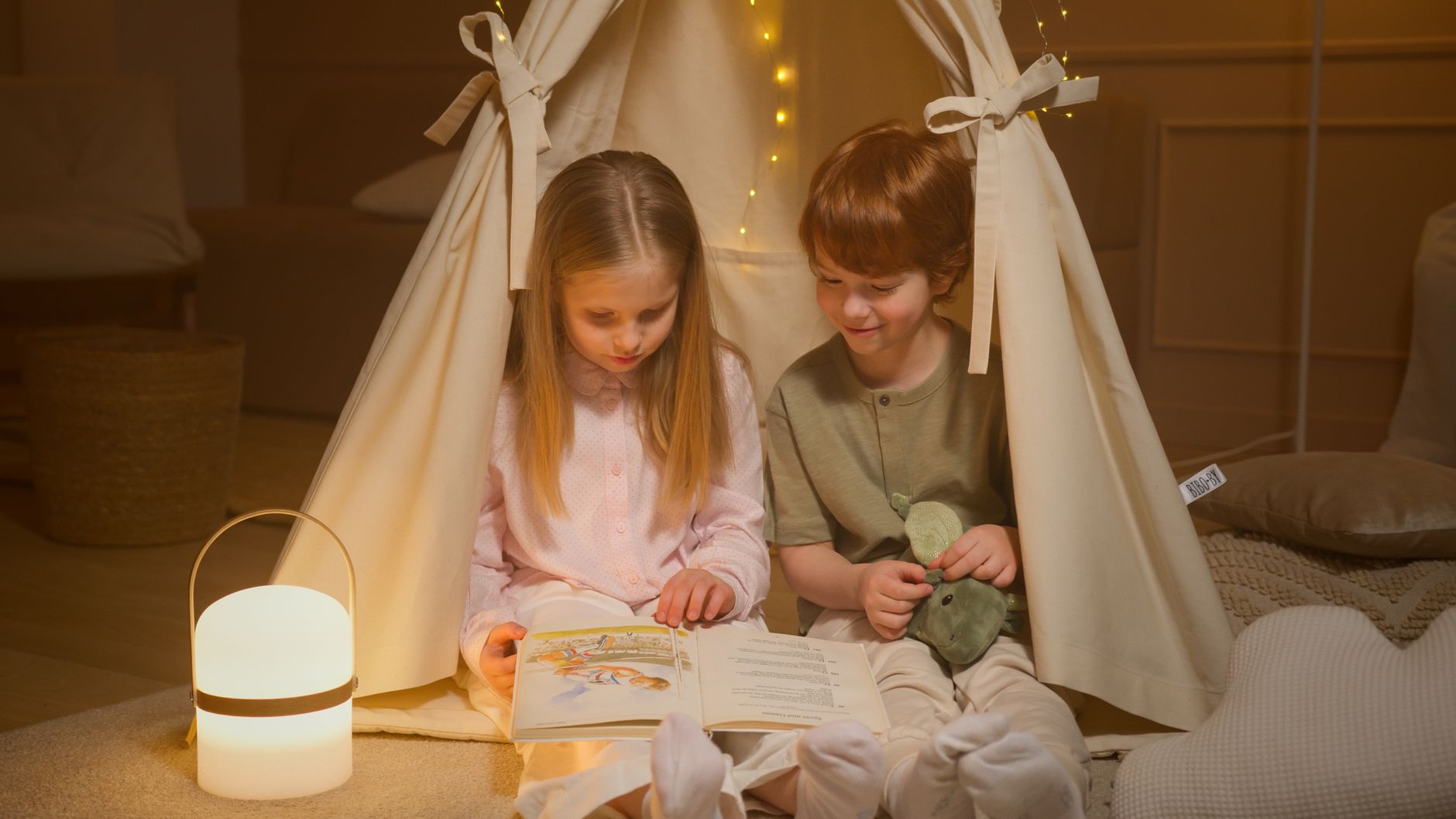
Read by torchlight before bed.
Listen to audiobooks in the car.
Share a chapter after lunch.
Children who see books as a source of joy are far more likely to become lifelong readers.
Make Reading an Adventure
Reading doesn’t have to happen in the same chair every day.
Try creating a little magic.
Read in:
- A garden den.
- A blanket fort.
- The local park.
- Under a shady tree.
- On the beach.
- At a café with a hot chocolate.
- By torchlight after dark.
- In pyjamas on a rainy morning.
Sometimes a change of scenery is all it takes to make a book feel like an adventure.
Turn Everyday Life Into Maths
One of the easiest ways to keep maths skills ticking over is simply to involve children in everyday life.
Ask questions like:
“We need six apples and we’ve already got two. How many more do we need?”
“If everyone has two sandwiches, how many should we make?”
“Can you work out which cereal is the best value?”
“We’ve got £10. What could we buy?”
Maths becomes much more meaningful when children can see why it matters.
Brilliant Maths Games
Learning through play is often the most effective learning of all.
Some family favourites include:
Shut the Box
A brilliant game for practising number bonds and addition.
Yahtzee
Fantastic for adding, counting and probability.
Dominoes
Great for number recognition and simple calculations.
UNO
Builds number recognition, strategy and quick thinking.
Rummikub
Perfect for older children learning number patterns and sequencing.
Monopoly
Excellent for money skills, mental arithmetic and decision making.
Snakes and Ladders
Ideal for younger children practising counting.
Playing Cards
You can use a simple pack of cards to play:
- Higher or lower
- Addition snap
- Multiplication war
- Number pairs to ten or twenty
- Quick mental maths races
It’s amazing how much learning can happen around the kitchen table.
Learning Through Baking
Baking is one of the richest learning experiences you can offer.
Children naturally practise:
- Measuring
- Fractions
- Weighing
- Reading instructions
- Sequencing
- Timing
- Problem solving
All while making something delicious together.
Kitchen Science
Turn everyday ingredients into experiments.
Try making:
- A baking soda volcano
- Oobleck
- Rainbow milk
- Ice melting challenges
- Floating and sinking investigations
- Homemade butter in a jar
Science begins with asking, “What do you think will happen?”
Nature Is the Best Classroom
The outdoors offers endless opportunities to learn.
Count butterflies.
Identify birds.
Press flowers.
Measure the tallest sunflower.
Watch ants carrying leaves.
Compare different tree bark.
Keep a weather diary.
Create a nature journal.
Ask questions together and look up the answers later.
Curiosity is a wonderful teacher.
Screen Time That Teaches
Not all screen time is created equal.
If your children enjoy technology, there are lots of fantastic educational options, including:
- Duolingo
- BBC Bitesize
- Teach Your Monster to Read
- Times Tables Rock Stars
- Khan Academy Kids
- National Geographic Kids
Everything in balance.
Writing Without Worksheets
Writing becomes much more exciting when it has a purpose.
Encourage children to:
- Write postcards.
- Keep a summer journal.
- Create comic books.
- Invent treasure maps.
- Write recipes.
- Make menus for a pretend café.
- Keep a nature diary.
- Interview grandparents.
- Write letters to friends.
- Create their own storybooks.
Every sentence they write builds confidence.
Visit Your Local Library
Libraries are one of the greatest free resources available to families.
Many run summer reading challenges, craft sessions, story times and themed activities throughout the holidays.
Children can explore new authors, discover different genres and choose books that genuinely interest them.
Giving children ownership over what they read often makes all the difference.
Learning Hides in Play
When children build LEGO, they’re exploring engineering.
When they create dens, they’re solving problems.
When they play shops, they’re using maths.
When they role-play, they’re developing language and social skills.
When they paint, they’re experimenting with colour, texture and creativity.
Play isn’t separate from learning.
It is learning.
A Gentle Goal for the Summer
Instead of trying to recreate school at home, aim for little moments of learning woven naturally into your days.
Read a story before bed.
Bake together once a week.
Play a board game after dinner.
Visit the library.
Count shells on the beach.
Measure puddles after the rain.
Wonder aloud.
Ask questions.
Follow your children’s curiosity wherever it leads.
Because the most valuable thing children can learn isn’t just facts or formulas.
It’s that learning is exciting.
That books are adventures.
That maths helps us understand the world.
That asking questions is always worthwhile.
And perhaps most importantly of all, that learning doesn’t stop when school finishes for the summer.
It simply changes shape.
Leave a Reply
You must be logged in to post a comment.