
Why Preschoolers Ask “Why?” So Often, and How Parents Can Turn It Into Everyday Science
Sponsored: this article was contributed by Brooklyn Preschool of Science.
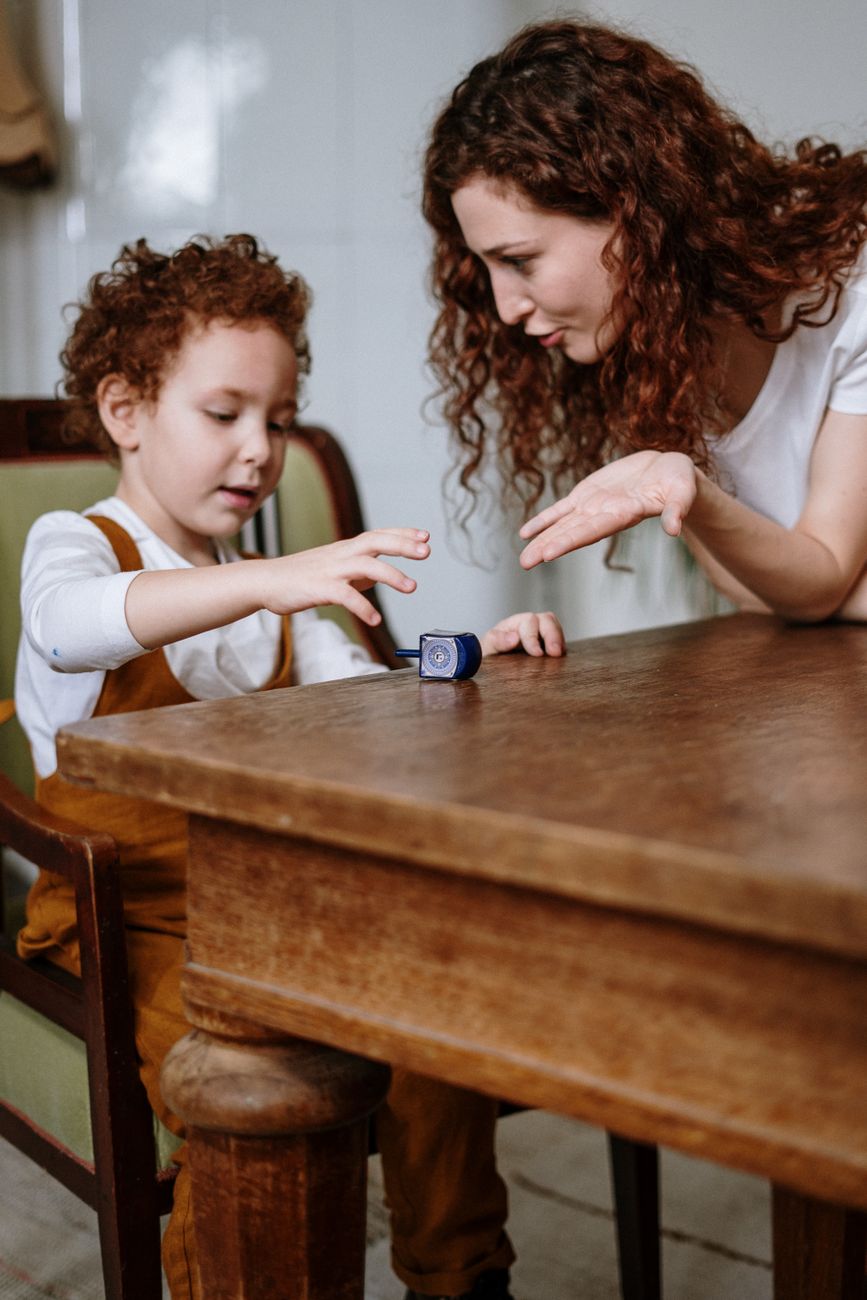
“Why is the sky blue?” “Why do worms come out when it rains?” “Why can’t I eat the snow?” If you spend your days with a three-year-old, you may hear dozens of questions before lunch. It can be tiring, but those questions are worth taking seriously. A child who keeps asking “why” is doing exactly what young scientists do: noticing something, wondering about it, and looking for an explanation.
If you’re wondering how to encourage curiosity in preschoolers, the good news is that you don’t need a lab, a kit, or a science background to support that curiosity. A few small habits, plus the ordinary materials already in your kitchen and neighborhood, are enough to turn everyday questions into real learning.
Why Preschoolers Ask “Why?” So Often
Between roughly ages two and five, children’s language grows quickly, and so does their awareness that the world follows rules they don’t yet understand. Things fall down, ice melts, the moon seems to follow the car. Asking “why” is one of the few tools a young child has to make sense of all that.
Questions are also social. A child who asks “why” is inviting you into a conversation. Researchers at Harvard’s Center on the Developing Child describe these back-and-forth exchanges between children and caring adults as “serve and return” and explain that they help build the foundations for language and social skills. When you respond to a question, even with “Hmm, what do you think?”, you’re returning the serve.
How Everyday Questions Build Early Thinking Skills
A preschooler’s question is usually the start of a chain of thinking, not the end. When a child asks why a puddle disappeared, they are practicing skills that will matter for years:
- Observing: noticing that something changed.
- Predicting: guessing what might happen next.
- Comparing: seeing how one thing is like or unlike another.
- Explaining: putting an idea into words, even a wrong one.
Getting the “right” answer matters less at this age than getting comfortable with the process. A child who learns that it’s fine to guess, check, and change their mind is building the habits behind critical thinking.
Five Simple Ways to Encourage Curiosity at Home
1. Answer a question with a question
Before explaining, try asking, “What do you think?” or “How could we find out?” You’ll learn how your child is reasoning, and they’ll get practice forming their own ideas. You can still share the answer afterward, ideally in a sentence or two.
2. Make a prediction together
Fill a sink or a large bowl with water and gather a few household objects: a spoon, a cork, a crayon, a leaf, a plastic lid. Before each one goes in, ask, “Will it sink or float?” Then test it. Sort the objects into two piles and talk about what the floaters have in common. There’s no worksheet and no score, just a guess, a test, and a result.
3. Slow down outside
Nature walks don’t need a destination. Pick one thing to look at closely: the bark on three different trees, the shapes of fallen leaves, the way water runs along the curb after rain. Bring a paper bag for collecting, and let your child choose what goes in. Back home, line up the treasures and talk about size, color, and texture.
4. Use the kitchen as a lab
Everyday materials are full of small experiments. Watch ice cubes melt on a plate in the sun and on a plate in the shade. Stir salt, sugar, and sand into separate cups of water and see which ones “disappear.” Mix a little baking soda and vinegar in a tray and talk about the bubbles. Keep the activities short and supervised, and let your child do as much of the pouring and stirring as possible.
5. Draw what you see
Give your child paper and crayons and invite them to draw a plant, a pet, or a bowl of fruit while looking at it. Drawing from observation encourages children to notice details they’d otherwise skip, like how many legs a bug has or where a leaf attaches to its stem. Ask them to tell you about their drawing, and write down a few of their words.
Turning Seasonal Activities Into Science
Seasons bring their own built-in experiments, and fall offers one of the best: the pumpkin.
A pumpkin sensory bin is simple to set up. An adult cuts the top off a pumpkin and sets it in a large plastic bin or on a tray. Then children can reach in and explore. Before anyone starts scooping, ask a few questions:
- What do you think is inside?
- Will it feel wet or dry? Warm or cold?
- How many seeds do you think there are?
Then dig in. Children can pull out the stringy pulp, separate the seeds, and describe what they feel: slimy, sticky, cool, squishy. Older preschoolers can count seeds into groups of ten, compare the sizes of seeds, or test whether a pumpkin piece sinks or floats. Afterward, you might rinse and roast a handful of seeds together and talk about how they changed in the oven.
A few practical notes: adults should handle all cutting, children should be supervised closely, and raw pumpkin seeds can be a choking hazard for young children, so keep them out of little mouths. The same approach works with apples, gourds, snow, or spring flowers. The specific item matters less than the pattern: wonder, predict, explore, and talk about it.
How Hands-On Preschool Learning Encourages Discovery
The same habits that work at home also shape many early childhood classrooms. When you visit preschools, it’s worth asking how teachers respond to children’s questions, and whether children get to touch, test, and build things rather than only watch or listen.
Some schools make this kind of inquiry the center of their program. Brooklyn Preschool of Science, a science-based preschool in Park Slope, describes an approach built on hands-on experiments, sensory exploration, and creative projects, with teachers encouraging children to ask questions and investigate ideas instead of memorizing facts. Whatever program you choose, look for that same spirit: plenty of real materials, time to explore, and adults who treat a child’s “why” as the start of a conversation.
Keep the Questions Coming
It’s easy to feel that you need to have every answer ready. You don’t. Some of the best responses to a preschooler’s question are “I don’t know, let’s find out” and “What do you notice?” Those words tell your child that curiosity is welcome, that not knowing is normal, and that the world is something they can investigate.
Next time you hear “Why?” for the tenth time in an hour, try turning it back into an adventure. A bowl of water, a walk around the block, or a pumpkin on the kitchen table may be all you need.
Leave a Reply
You must be logged in to post a comment.